Stop point - Fertőrákos - Sanctuary of Mithras
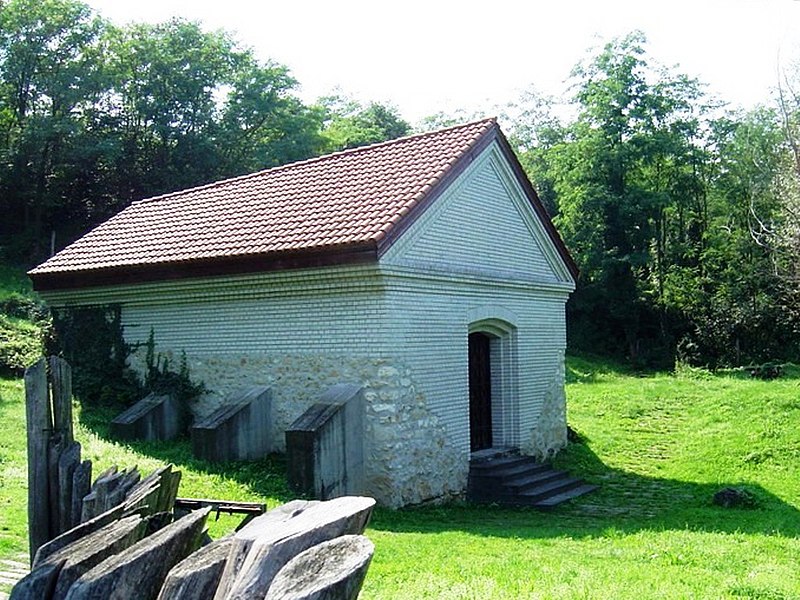
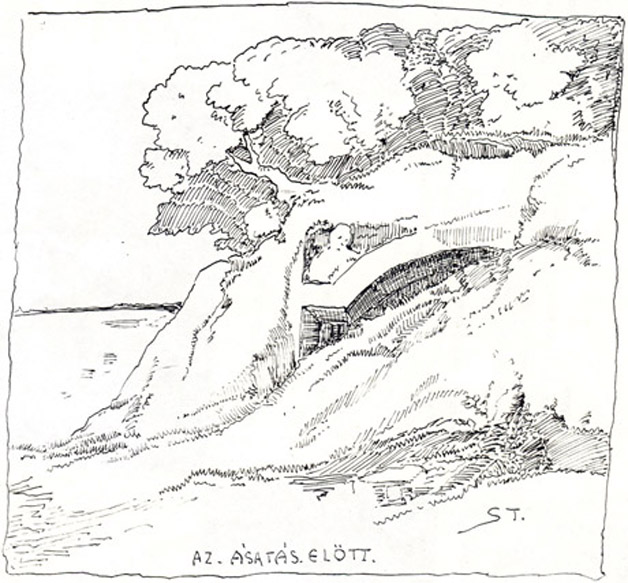
The Mithraic Sanctuary[1] or Mithraic Cave[2] (Latin: Mithraeum) is a Roman monument in Győr-Moson-Sopron County, a former ritual site of the mystery religion associated with the cult of the god Mithras. The sacral building with a protective structure in the Fertő-Hanság National Park and the Fertő/Neusiedlersee cultural landscape, which is a UNESCO World Heritage Site, is a rarity, as there are only four such sites in Hungary: here, in Szombathely, in Aquincum (four in Aquincum) and in Sárkesz.
The site is located on the Hungarian-Austrian border, next to the road connecting Fertőrákos to Mörbisch am See, which is currently a municipal road. It can be reached from the centre of Sopron by road 8527, from Kópháza-Balf and from the main road 84 by road 8526.
The cult of Mithras
The artificial cult of Mithras, using the name of the Proto-Indo-Roman deity and some of the myths associated with him, was a very widespread mystery religion in the Roman Empire between the 2nd and 4th centuries AD. Its central deity, Mithras, the invincible sun god, who, as a symbol of light and life, killed his opponent, the bull, the embodiment of darkness and evil, in a cave, and there the feast was held, during which Mithras consumed the animal. The doctrines of the religion were known only to a small number of initiates, and the mystery of the deity was revealed to those who joined the cult through seven initiations. The ceremonies took place in a sunken sanctuary called the Cave of Mithras, with a higher platform (podium) on either side for the initiated spectators, and a central recess (cell) for the ceremony itself. During the initiation, the worshipper was laid in the recess and the bull, whose blood initiated him, was killed above him. The ritual and the sacrifice were symbolic, since there are no signs of the usual signs (pits or other recesses for the blood) in the excavated shrines, and the small size of the rooms would not have allowed a bull to be placed next to the worshippers.
He came to Rome in the 1st century and became one of the most popular gods of the Roman Empire until the 5th century. By the reign of the emperor Commodus, his cult was already state-supported. In the 3rd century his role grew in importance, merging with Sol Invictus (meaning 'the invincible sun') to become one of the most important state cults under Emperor Aurelian. In 307, under the Christian persecutor Diocletian, it was declared the main protective god of the empire. Its official cult retained its influence even under Emperor Constantine I, who was considered a Christian. For more than a century, the faith of Mithras was a serious opponent of Christianity.
Source: wikipedia
Hasonló találatok
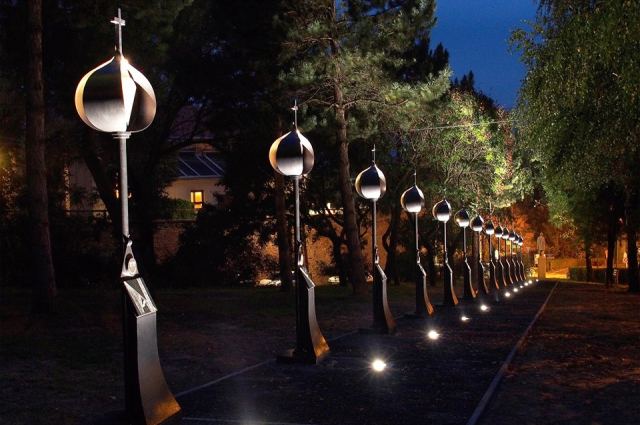
Stop point - Pannonhalma - Everyone's Crossroads
Pannonhalma - Mindenki keresztútjaThe Way of the Cross, inaugurated in autumn 2014, is located in the park next to the parish church, behind the statue of St...
More
Stop point - Pannonhalma Archabbey
Pannonhalma -FőapátságFounded in 996 and still, in continuous operation, the Benedictine monastery of Pannonhalma is one of Hungary's most outstanding...
MoreStop point- Sopron - Church of the Assumption (Goat Church)
Sopron - Nagyboldogasszony templom (Kecske templom)The Franciscan monks first built their monastery, then around 1280 they built a church next to it, which is an outstanding work...
More
Stop point - Hidegség - Church of St Andars
Hidegség - Szent Andárs templomThe round chapel of the church on the hill above the village was built in the 12th century. The interior of the originally...
More