More 1 picture
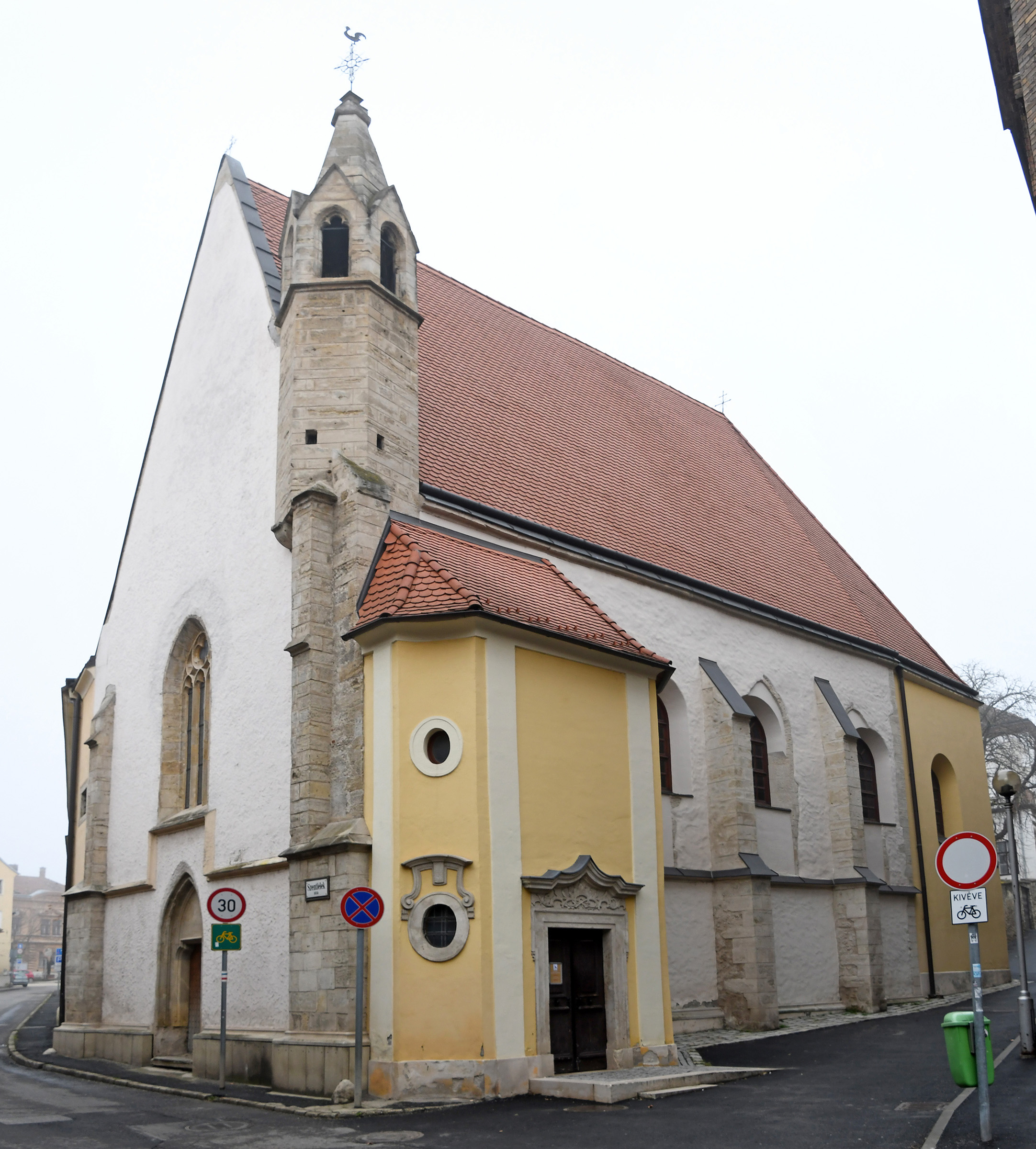
The first authentic mention of the church, which is Gothic on the outside and Baroque on the inside, dates back to 1406. It was probably founded by the Johannites, who had a hospital church built opposite the isopotala, but it was not in their hands for long. The Chapel of the Holy Spirit was built on the parish priest's plot next to the new parish house and was the house chapel of the current parish priest. It is mentioned as a church since 1521.
According to documents, in addition to the main altar, it had four side altars (St. Erasmus 1438, St. Peter and Paul 1428, the Virgin of the Seven Sufferings 1519, St. Florian, first half of the 16th century). When in 1608 the town parish priest gave up the right to use the church of St. Michael, only this church remained in use. After 1627, the church was restored and its furnishings renewed. After 1666, László Zichy continued the renovations, had two bells cast and the main altar gilded. In the 1673 renovation, the wrought iron cross with the rooster, which still exists today, was added to the top of the tower.
After 1674, however, less care was taken again, as St Michael's was once again used by Catholics. In 1754 the sacristy was built. In 1767, the statue of Mary with the "wooden peg" was moved from St Michael's to the high altar, and is still very popular today. In 1782 the building was vaulted in Baroque style and the church was extended from the sanctuary. At this time, István Dorffmaister worked here and painted the whole church in the taste of the time, flooding the walls with late Baroque decoration in wreaths.
The single nave is made up of three bays, two of which are narrower and the middle one is square. The pressed, basket-arched triumphal arch rests on double pilasters. The sanctuary is in two parts: the first with a Bohemian glass vault, the second half-domed. The oval dome of the sanctuary bears an allegory of the Church. In the centre sits a strong female figure, holding a cross in one hand and a chalice with a wafer in the other, with the Gospel quotation In printípio erat verbum.
In the central section of the nave the artist painted the largest fresco, the scene of the Assumption and Coronation of Mary. The Virgin Mary ascended into heaven and is greeted by the Holy Trinity surrounded by a host of angels. Jesus, on the left, and the Father, on the right, place the crown on Mary's head, who is girded with glory. In the four corners of the fresco are the four evangelists.
The main altarpiece, which depicts the coming of the Holy Spirit, seems unfinished, rather like a sketch. It is possible that it was not painted by Dorffmaister, but by one of his teachers at the Vienna Academy, Joseph Ignaz Milldorfer. One sketch is in the Storno Collection, another in the Museum of Fine Arts in Budapest, and a later copy in the Sopron Museum.
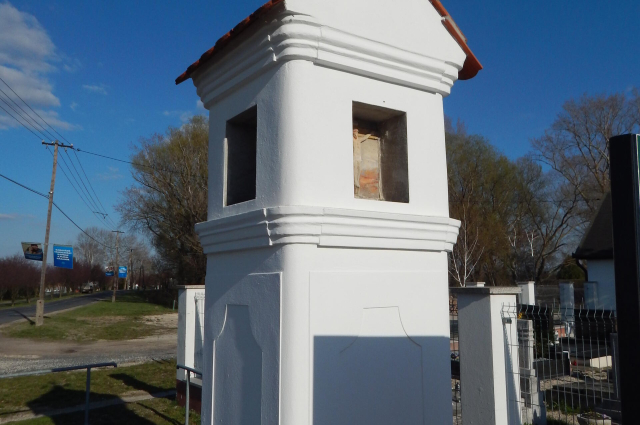
The small building near the cemetery gate is the "Fehérkép". The square, whitewashed, masonry tower with a small double cross on...
More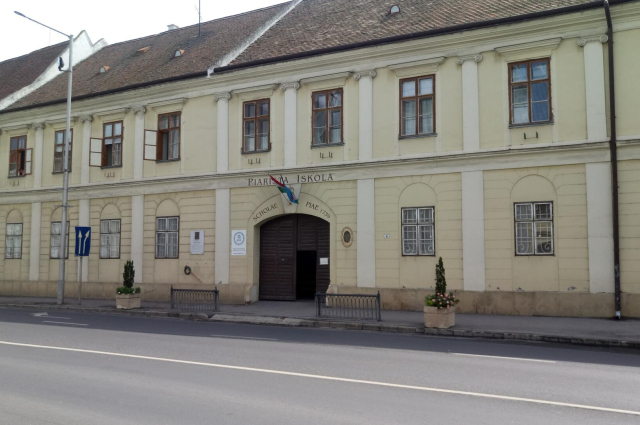
The first secondary school in Moson county was opened here in 1739. Until the nationalisation of the school (1948), the youth of...
More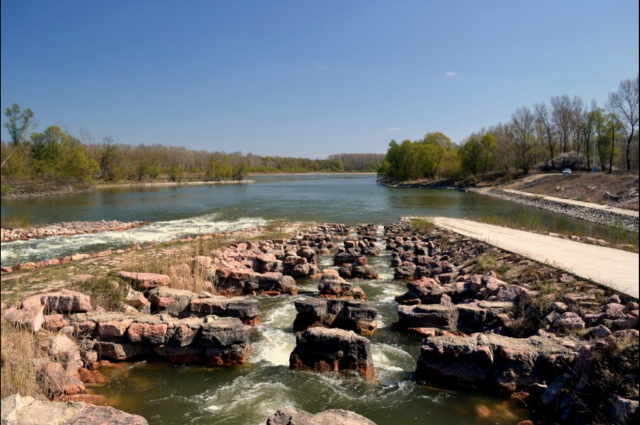
A statue commemorating the 102 kg of viza caught in the inter-island branch system in May 1958, at the Aravai Lock. In addition...
More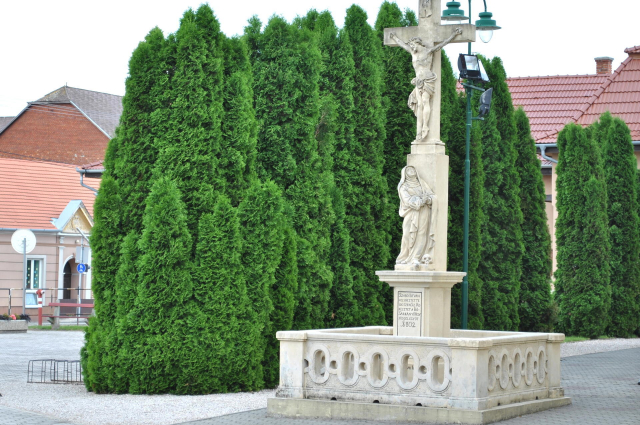
The stone cross next to the church: on its pedestal stands a statue of Mary looking up to the sky. It is a neoclassical work...
More