
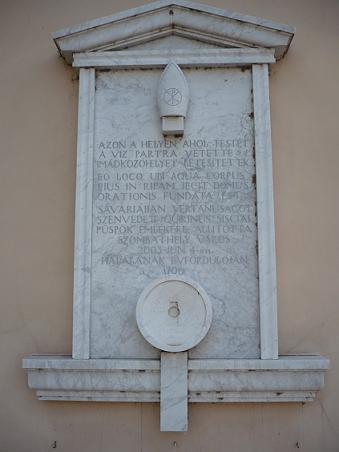
Stop point - St Quirinus Memorial, Perint Bridge
Where his body was cast ashore, a place of worship was established"
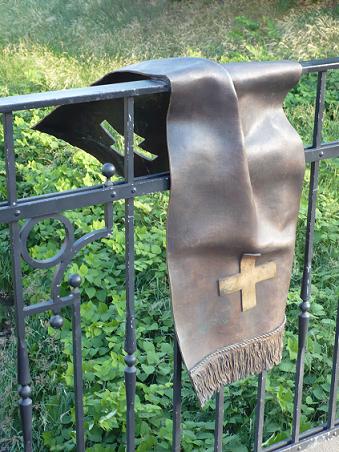
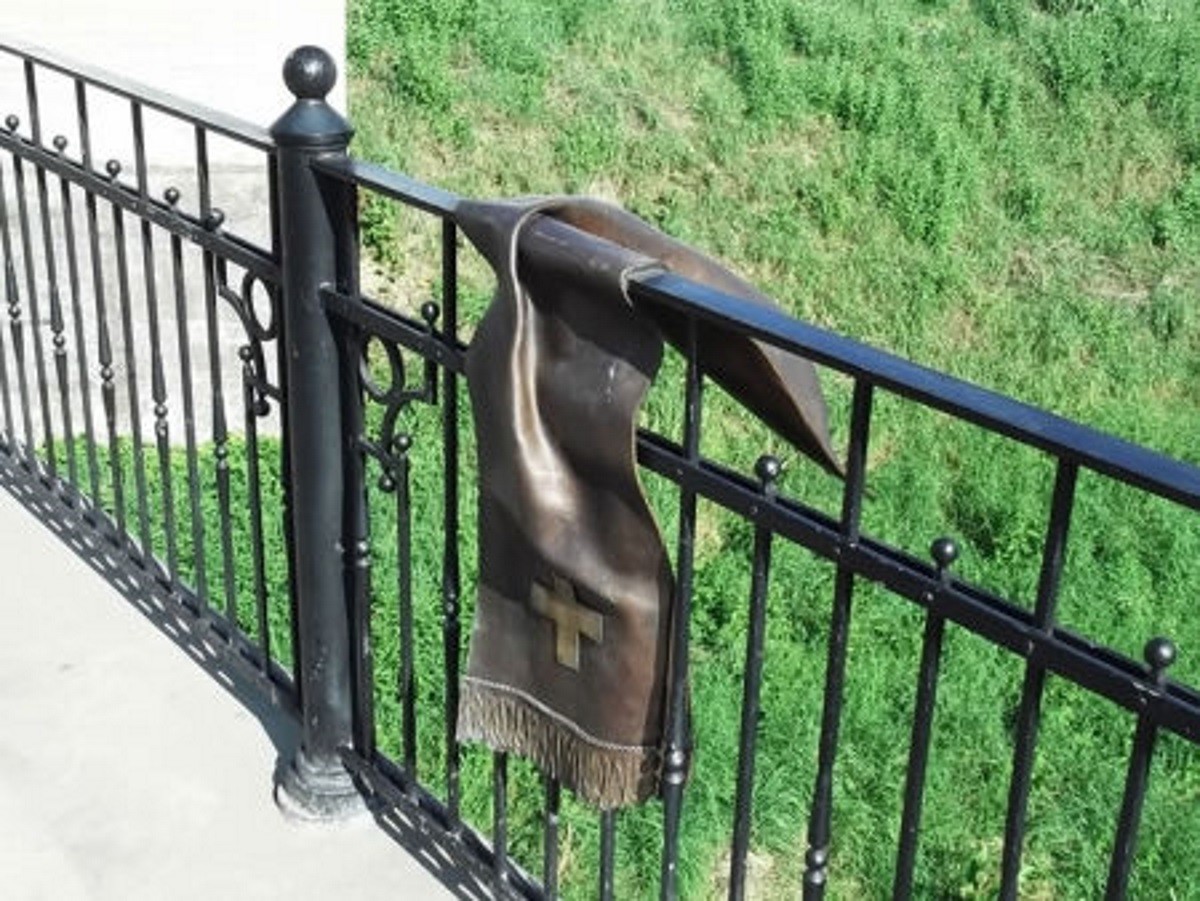
The memorial plaque is the work of sculptor Endre András Tornay, while the bronze bishop's belt on the bridge railing is the work of Gábor Veres.
There was a bridge in the immediate vicinity of this place already in Roman times. The exact location of the Roman bridgehead, only a few metres from the present bridge, is confirmed by archaeological evidence. It is the site of the martyrdom of St Quirinus, who was thrown into the Perinth here with a millstone around his neck.
The site of the saint's death was already a place of worship in early Christian times.
József Elek Horváth, who first wrote and published the history of the town in Hungarian in 1825, commemorates the event in this way:
"Putting a millstone on his weak neck with a rough clasp
A' Sibaris' was swiftly pushed down into the river's flood,
Where, though his neck was heavy with stones, he gently
Floats above ....
Hasonló találatok
Stop point - Feketeerdő
FeketeerdőThe first mention of the settlement on the banks of the Moson-Danube dates back to 1274. Its Catholic church, whose patron saint...
More
Stop point - Máriakálnok
MáriakálnokThe village is a renowned place of pilgrimage. According to legend, Christian soldiers retreating from the Turks stopped to rest...
More
Stop point - Pannonhalma Archabbey
Pannonhalma -FőapátságFounded in 996 and still, in continuous operation, the Benedictine monastery of Pannonhalma is one of Hungary's most outstanding...
MoreStop point - Nemeskolta
NemeskoltaNemeskolta is an Árpád-era settlement. The first mention dates back to 1280. The village, inhabited by small nobles, is the...
More