
Stop point - Mosonmagyaróvár - Church of St Gotthard
There is a great deal of uncertainty between the various architectural styles, but it is certain that the mixed population of our early Árpád settlement, at the site later known as the "Villa Óvár", may have built a church after 1260. Later, for many centuries, two churches, a larger and a smaller one (the chapel of St. Lazarus), built side by side in this part of the town, were visible, but there are few sources on their early history, which goes back at least 300 years.
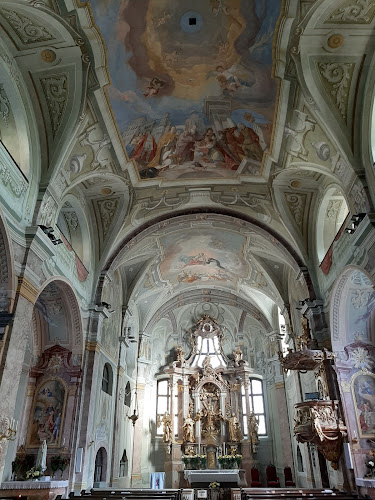
After the Turkish pillage and arson, German craftsmen and merchants restored the church and placed it in the patrocinium of St. Gotthard, which served the Catholic population even in its ruined state. (1) It was rebuilt in 1660, but later again, it was the victim of arson by the retreating Turks from Vienna. The church, which had two towers at the time, lost both of its spires, and the ruins were used to build a watchtower with a clock and bell, rebuild the original square-ended sanctuary, and begin repairs to the interior, with considerable donations from the then city fathers and church dignitaries. Later, for about a hundred years, restoration and rebuilding work was carried out on both the interior and exterior, in small and large scale.
Electric lighting was introduced in the early 1900s, ceiling paintings were repaired in 1959, the wooden altarpieces were gilded, the interior was covered with stone in 1978, and in 1994 a major restoration process began, in which Gyula Szőke, parish priest and canon of Győr, played an important role. His sacrifice and energetic work is commemorated by a plaque at the entrance to the church. The final chapter of the reconstruction was completed by József Nagy, parish priest, and our church received a new marble altar and ambo.
Hasonló találatok
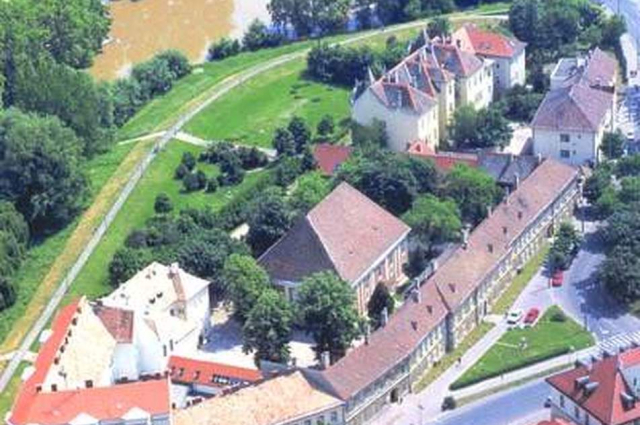
Stop point - Győr - Lutheran Church
Megállópont - Győr - Evangélikus templomThe construction of the church began in April 1784, based on the plans of the master mason Jakab Neumayer, and the consecration...
More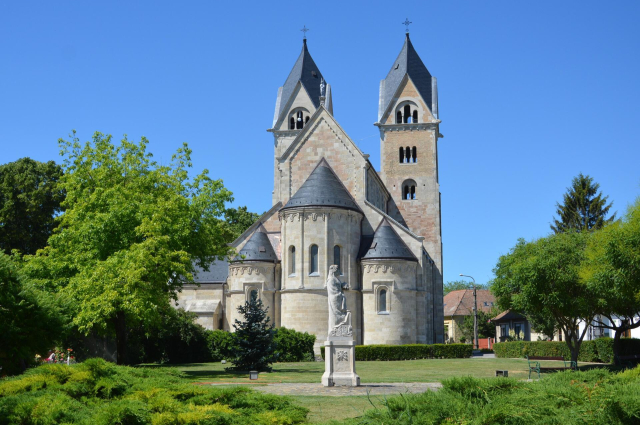
Stop point - Lébény - St James Church
Lébény - Szent Jakab templomThe Benedictine monks settled in Lébény in the Árpád era. The abbey is already mentioned in a document dated 1199. The church at...
More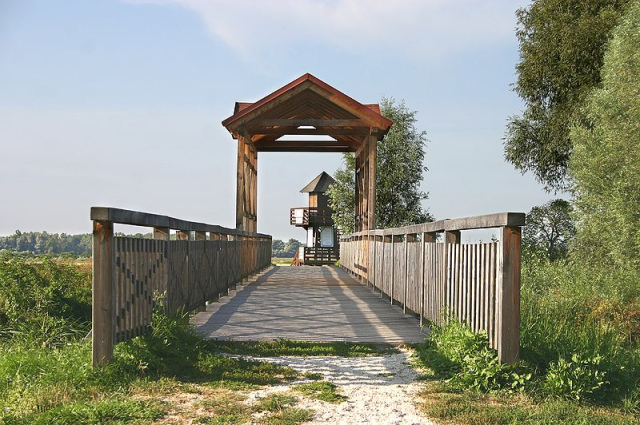
Stop point - Andau - Mosontarcsa bridge
Andau - Mosontarcsai hídThe bridge is not actually in Mosontarcsa, but 10 km south of the village on the Austrian-Hungarian border. The tradition of its...
More
Stop point - Pannonhalma Archabbey
Pannonhalma -FőapátságFounded in 996 and still, in continuous operation, the Benedictine monastery of Pannonhalma is one of Hungary's most outstanding...
More