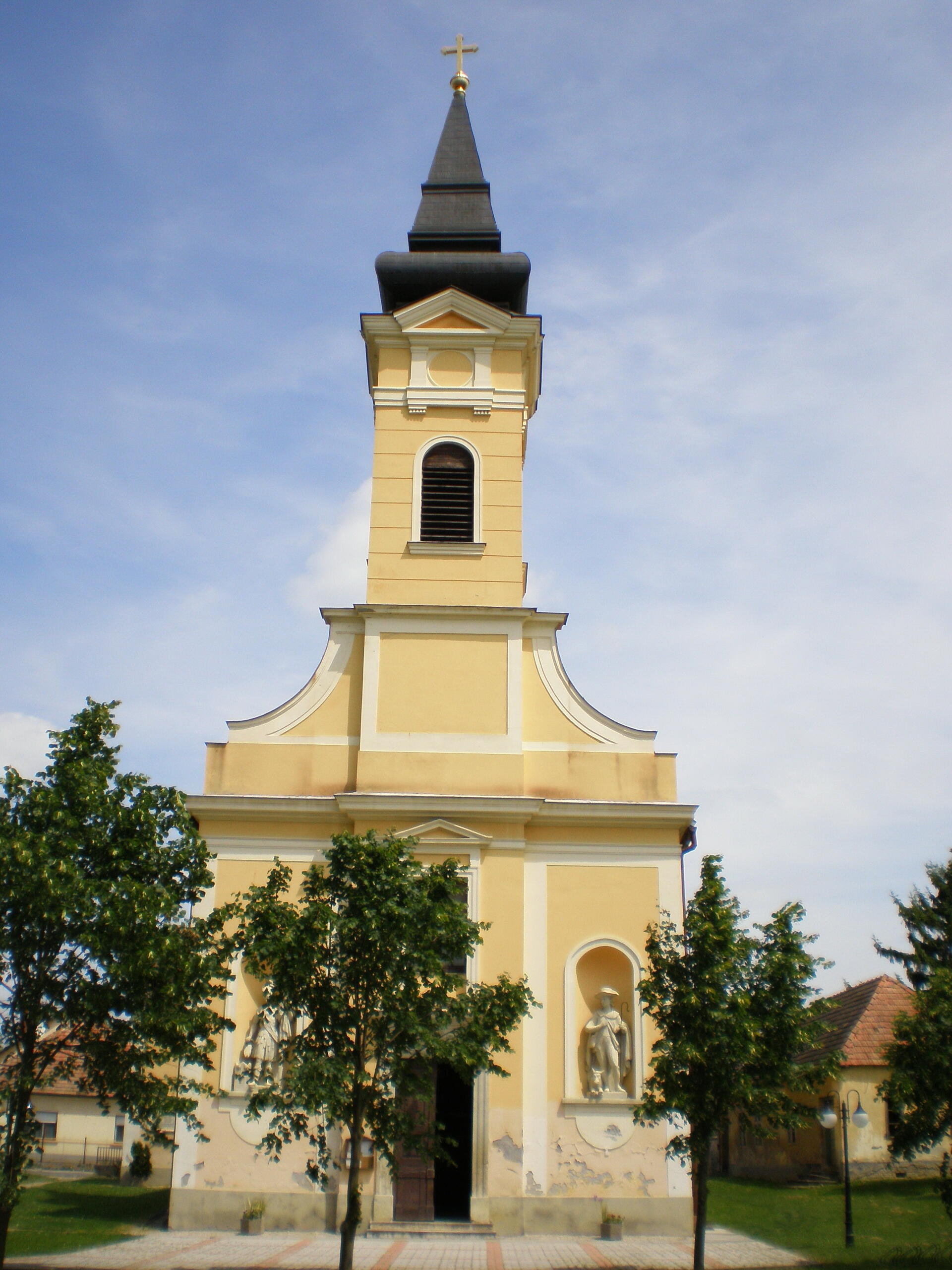
Point of interest- Hédervár - Church of St Michael
According to records, there was already a chapel here in the first half of the 13th century. The present building's predecessor was probably built in 1397. The niches in the façade of the church contain stone statues of St. Florian and St. Vendel in Swiss costume.
The wrought-iron cross next to the church, which used to stand in the old cemetery, dates back to the 14th century. The sanctuary wall is decorated with a 19th century image of Christ. On the rich altarpiece, between the gilded statues of St Stephen and St Lazarus, St Michael battles evil. The wooden statues of St John of Nepomuk are symbols of faith, hope and love. On the other side altar is a copy of the image of Mary the Tear-bearer from Győr Cathedral. The baptismal font is made of red marble, eight.-sided, Gothic, with the coat of arms of the country and the Héderváry coat of arms (art historians say that the inscription "Anno Domini 1031" does not indicate the year of its construction). The sacristy wall is decorated with a memorial to the victims of the First and Second World Wars.
Hasonló találatok
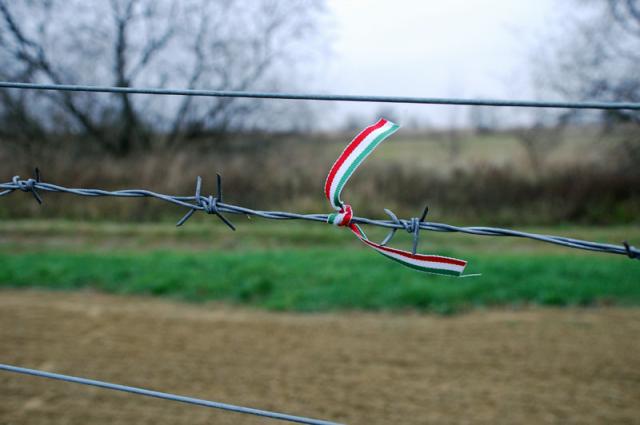
Point of interest - Hegykő - Iron Curtain Memorial
Hegykő - Vasfüggöny EmlékhelyAt the edge of Hegykő, you can see what the Iron Curtain once looked like in its original place. The memorial was largely built...
More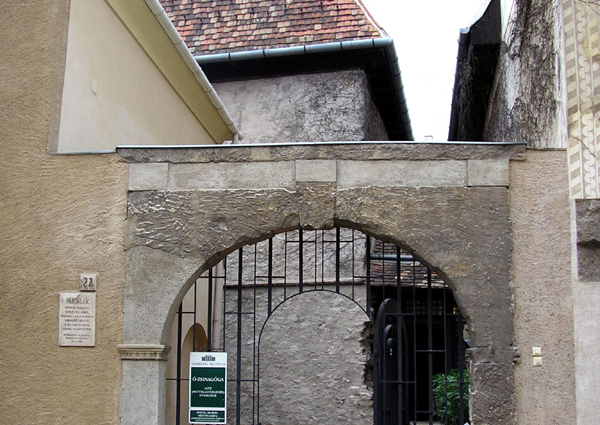
Point of interest - Old synagogue
Sopron - ÓzsinagógaThe former synagogue stands in the courtyards of two late medieval buildings in the city centre.The first written records of the...
MorePoint of interest - Mosonmagyaróvár - Saint Rozália Chapel (Moson)
Mosonmagyaróvár - Szent Rozália-kápolna (Moson)The chapel in the triangular square was built by the citizens of Moson in honour of St. Sebastian, St. Roch and St. Rozalia,...
More
Point of interest- Fertő-Hanság National Park
Fertő-Hanság Nemzeti ParkThe Fertő-Hanság National Park lies in the north-western part of Hungary. Its predecessor was the Fertő-tó National Park, which...
More