More 1 picture
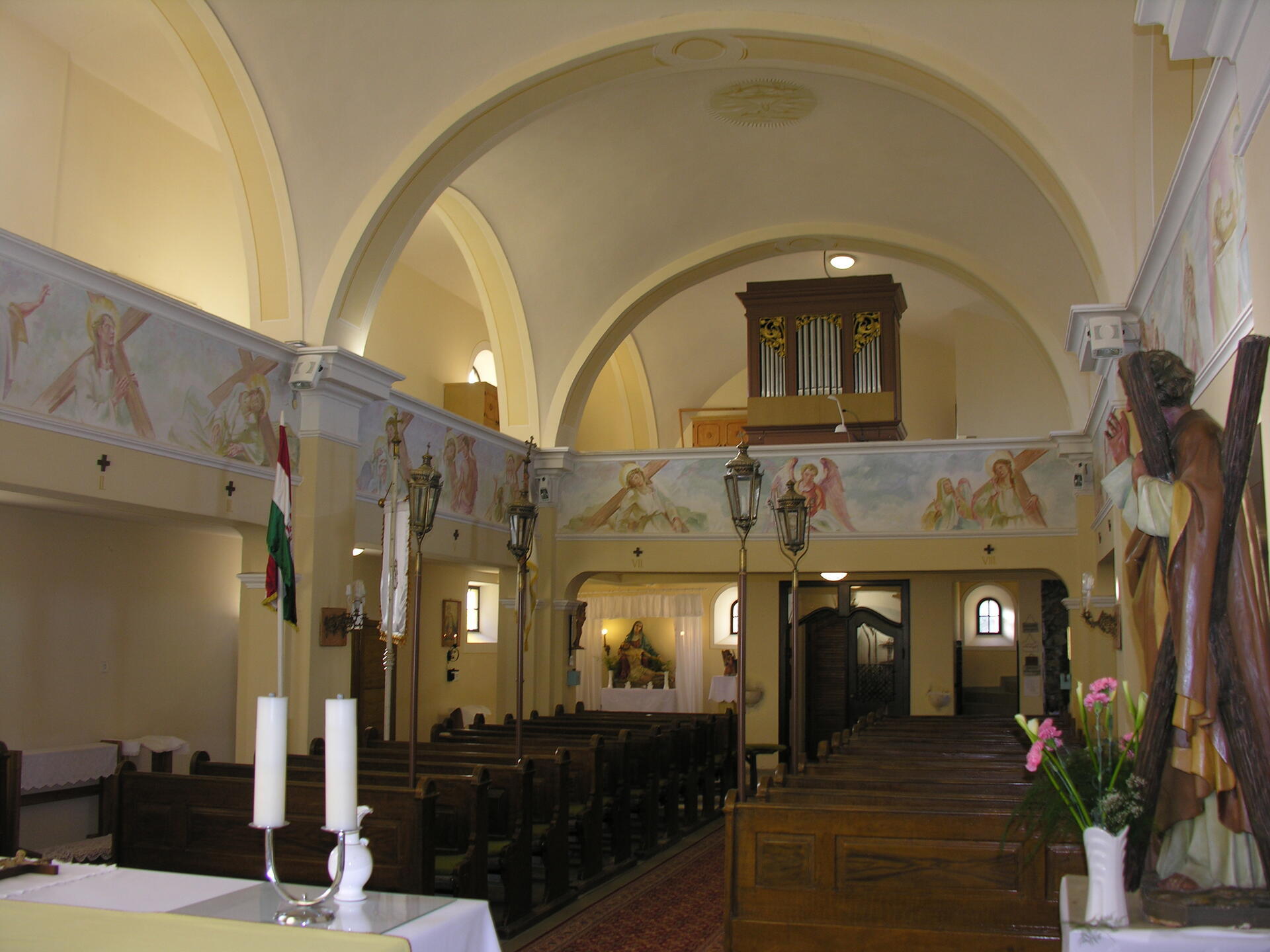
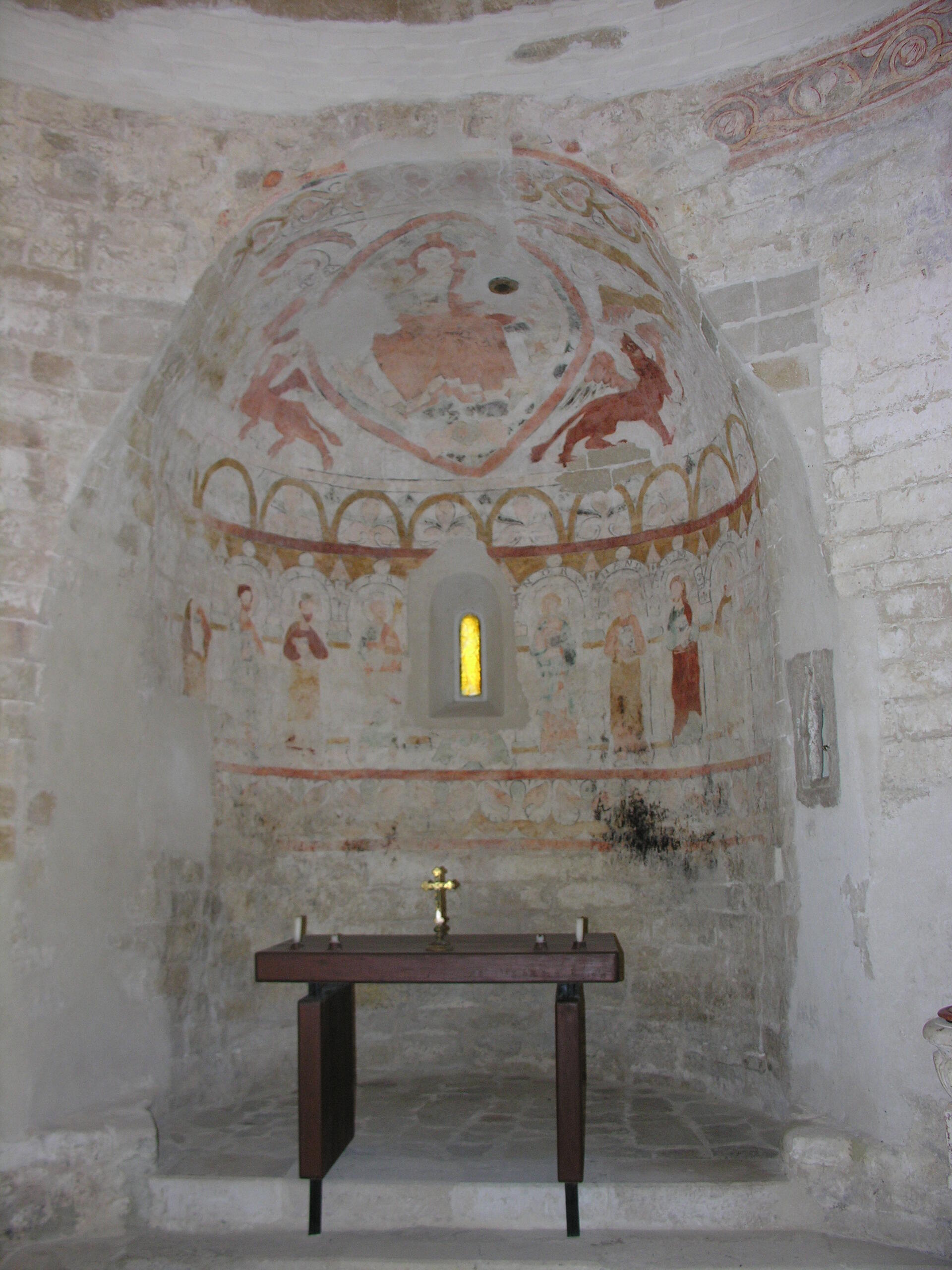
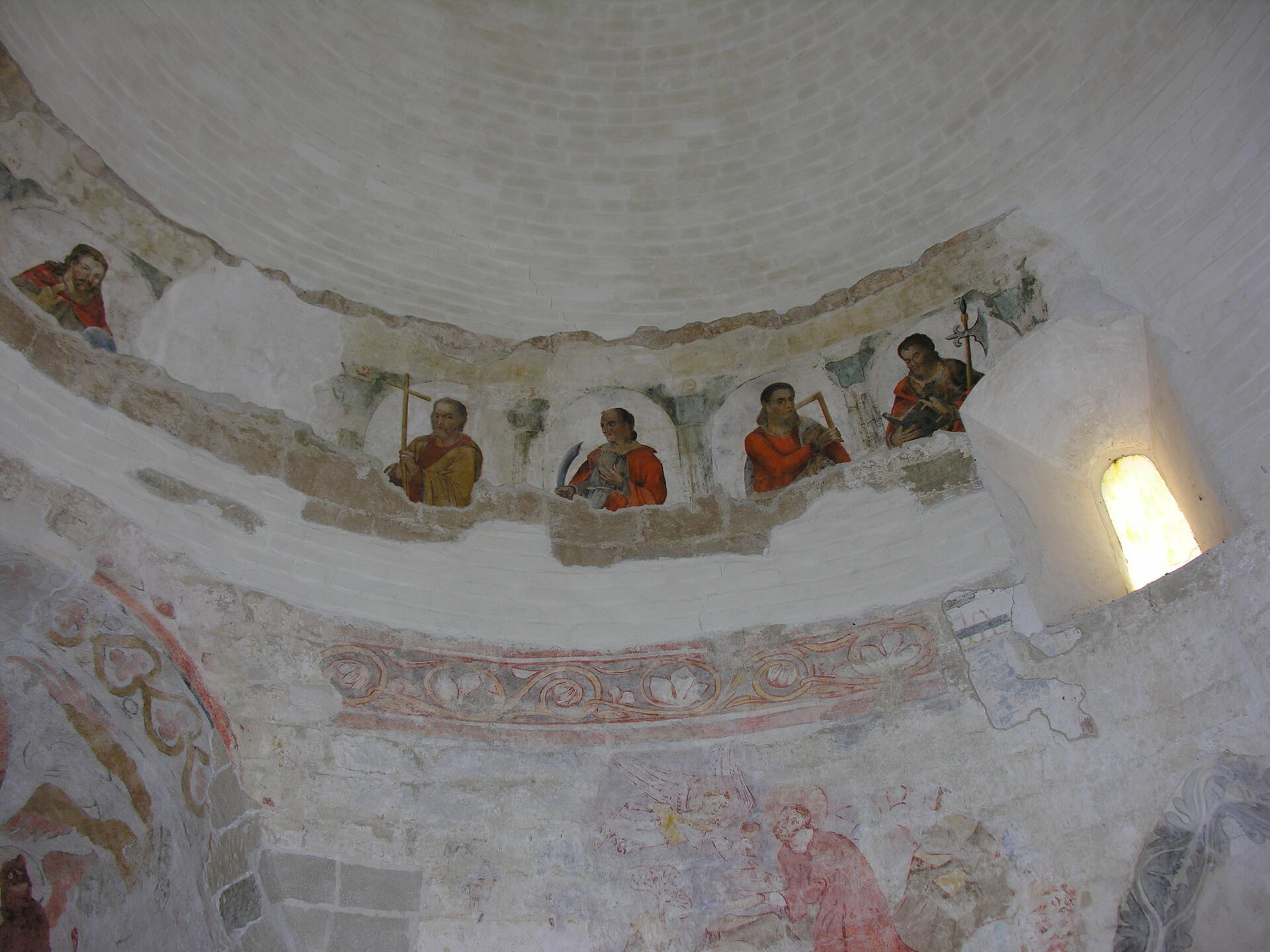
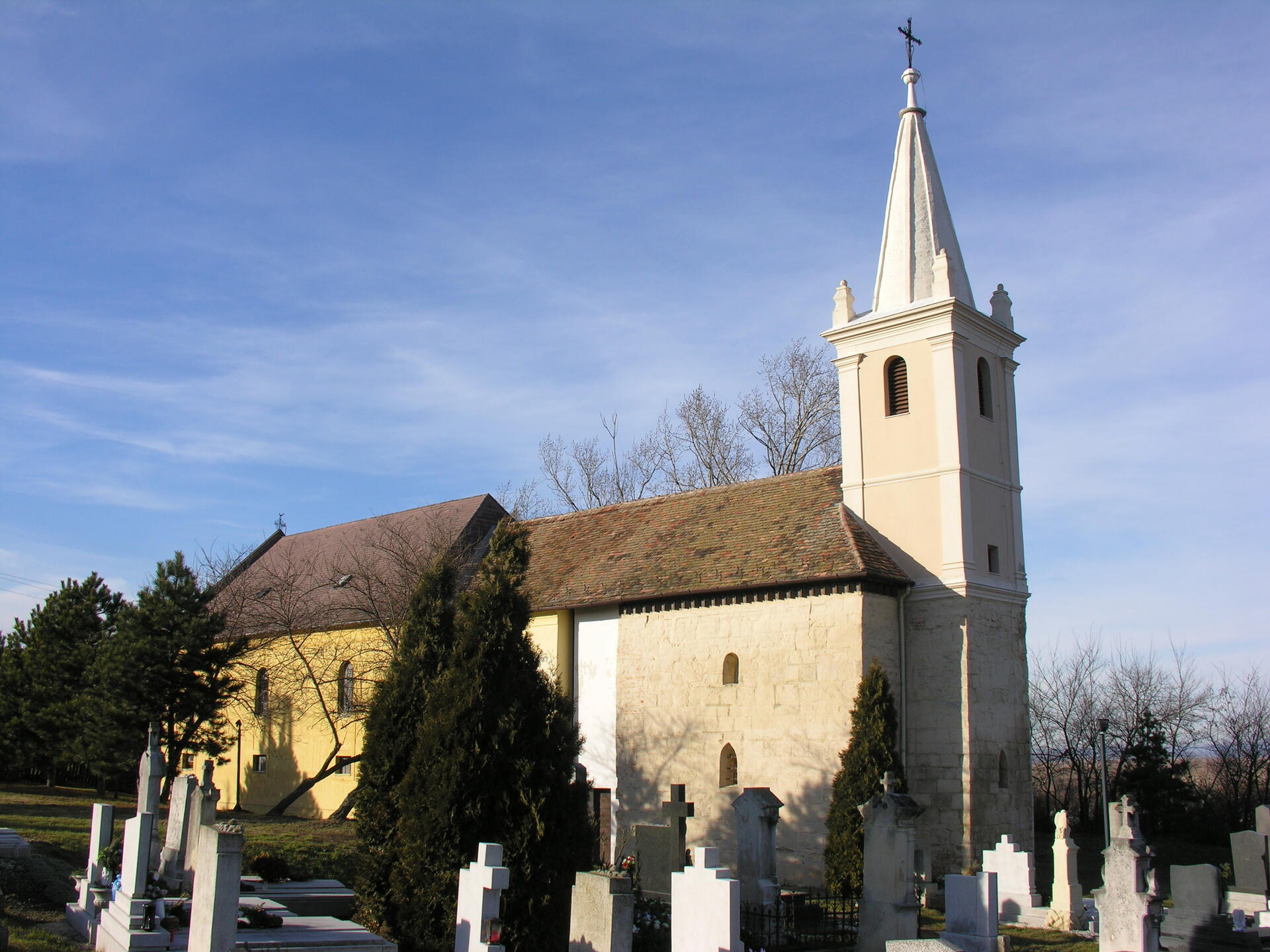
The round chapel of the church on the hill above the village was built in the 12th century. The interior of the originally free-standing rotunda is connected to a horseshoe-shaped apse. The tiny sanctuary is decorated with frescoes from the post-Tatar period. On the vault is the image of Christ in an almond-shaped frame, surrounded by the symbolic figures of the Evangelists, with the Apostles below. The round church was enlarged around 1660 by Croatian settlers who replaced the Hungarian population driven out by the Turks. The sanctuary was moved to the leftover part of the rotunda. In its half-dome, another apostolate was painted in Renaissance style. The tower was raised in 1748. The Baroque reconstruction extended to the whole church. In the 1930s, the building was enlarged, and in the 1970s, the circular church was separated from the three-nave church. The ancient stone basin cover is a miniature Baroque carving of St John the Baptist and Jesus. Two baroque wooden statues of St. Augustine and Pope St. Gregory have been placed on the walls of the new part of the church. The "eponymous" St Andrew is also depicted in an altarpiece, mosaic and statue. The paintings on the parapet of the parapet depict the stations of the Way of the Cross. The inner tapestry of the tabernacle door is embroidered by the Sisters of St Teresa of Calcutta.
The Franciscan monks first built their monastery, then around 1280 they built a church next to it, which is an outstanding work...
MoreThere is a great deal of uncertainty between the various architectural styles, but it is certain that the mixed population of...
More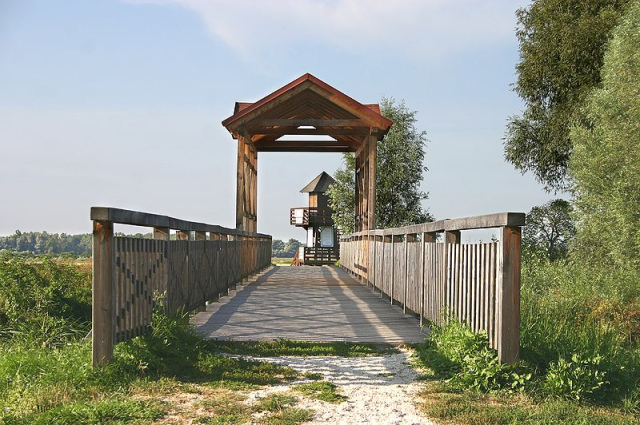
The bridge is not actually in Mosontarcsa, but 10 km south of the village on the Austrian-Hungarian border. The tradition of its...
More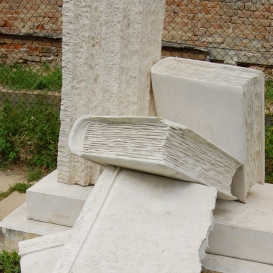
Holocaust Memorial and Synagogue
The memorial was erected in 2004 by the Karzat Cultural Centre Foundation in memory of the...