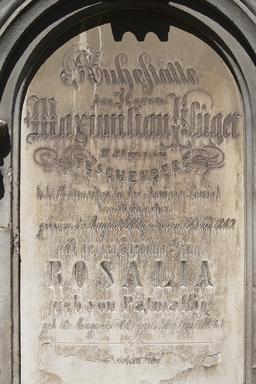
More 2 picture
On the outskirts of the settlement, archaeologists have found the remains of a Roman limes.
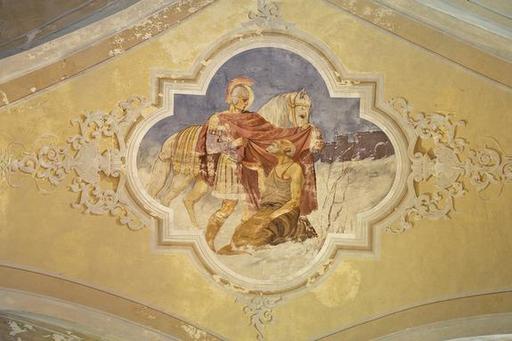
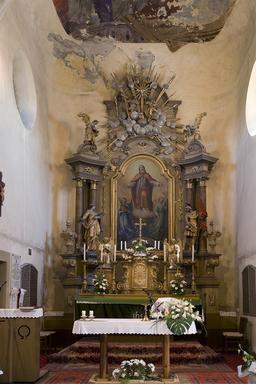
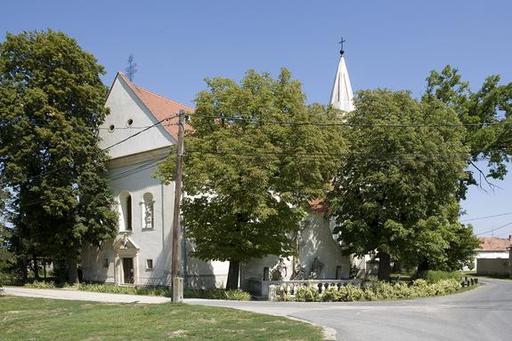
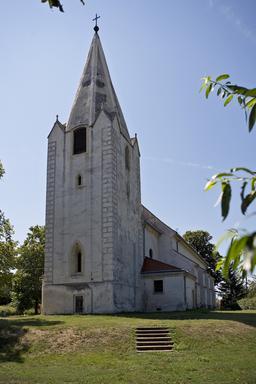
Its first church, dedicated to Saint Martin, was built in the 13th century. Its tower was built on the walls of a Roman watchtower. During the last Turkish campaign against Vienna in 1683, the village was destroyed. All that remains of the medieval building are the pointed-arched, masonry windows of the tower, the mural of the south wall and the 14th century sacristy niche. The church took its present form in the Baroque period. In one of the sculpted windows on the west façade is a statue of St. Martin, the church's namesake saint. The painting on the main altar depicts the glorification of Saint Martin. At the bottom of the painting is the text MARTINUS HIC PAUPER COELUM DIVES INGREDITUR HYMNUS COELESTIS HONORATUR. The rich decoration of the altars, the angelic figures and the gilded statues of the saints show signs of the mature Baroque. On either side of the pulpit are depictions of bishops, one of whom is presumably St Martin offering gold coins to a beggar at his feet. The other shows the bishop holding a flaming heart and a shepherd's crook. On the ceiling in front of the choir is the scene of Amiens. Martin, dismounting from his horse, gives the beggar his cloak. A marble plaque in the wall tells of the village where the great composer Ferenc Liszt's great-grandfather and grandfather Ádám Liszt were born.

One of the most famous buildings in Fertőboz, and perhaps in the whole area, is the Gloriette, a memorial hall built on the...
More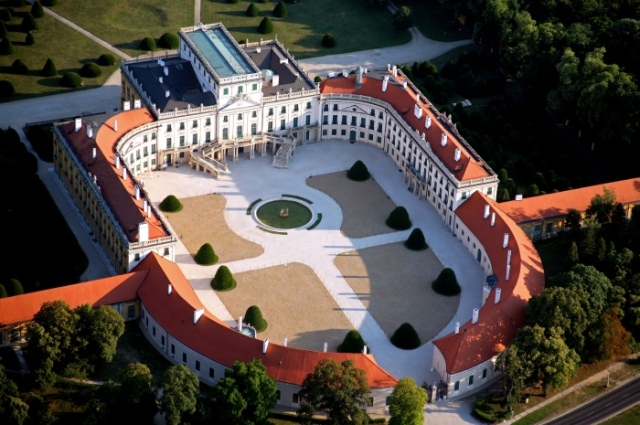
The complex of buildings of the Esterházy Castle of Fertőd and the contemporary history exhibition in it is the main attraction...
More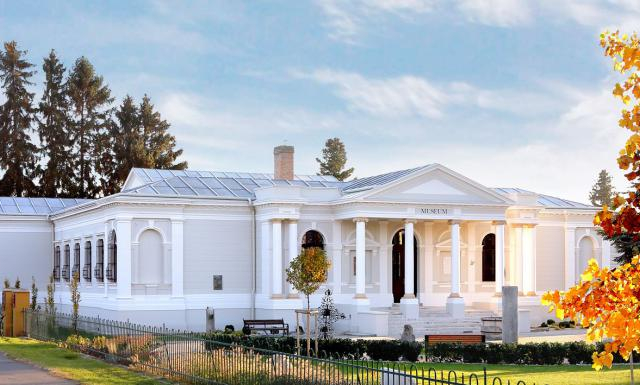
The Hanság Museum in Mosonmagyaróvár is one of the oldest continuously operating museums in Hungary. The museum was founded in...
More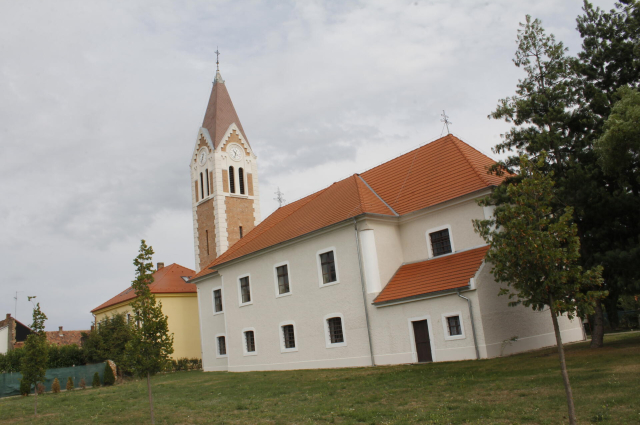
There was an Evangelical church in Rajka as early as the 17th century, but it was destroyed during the Turkish attack on Vienna....
More