
Point of interest- Pannonhalma - Happy Mór Lookout
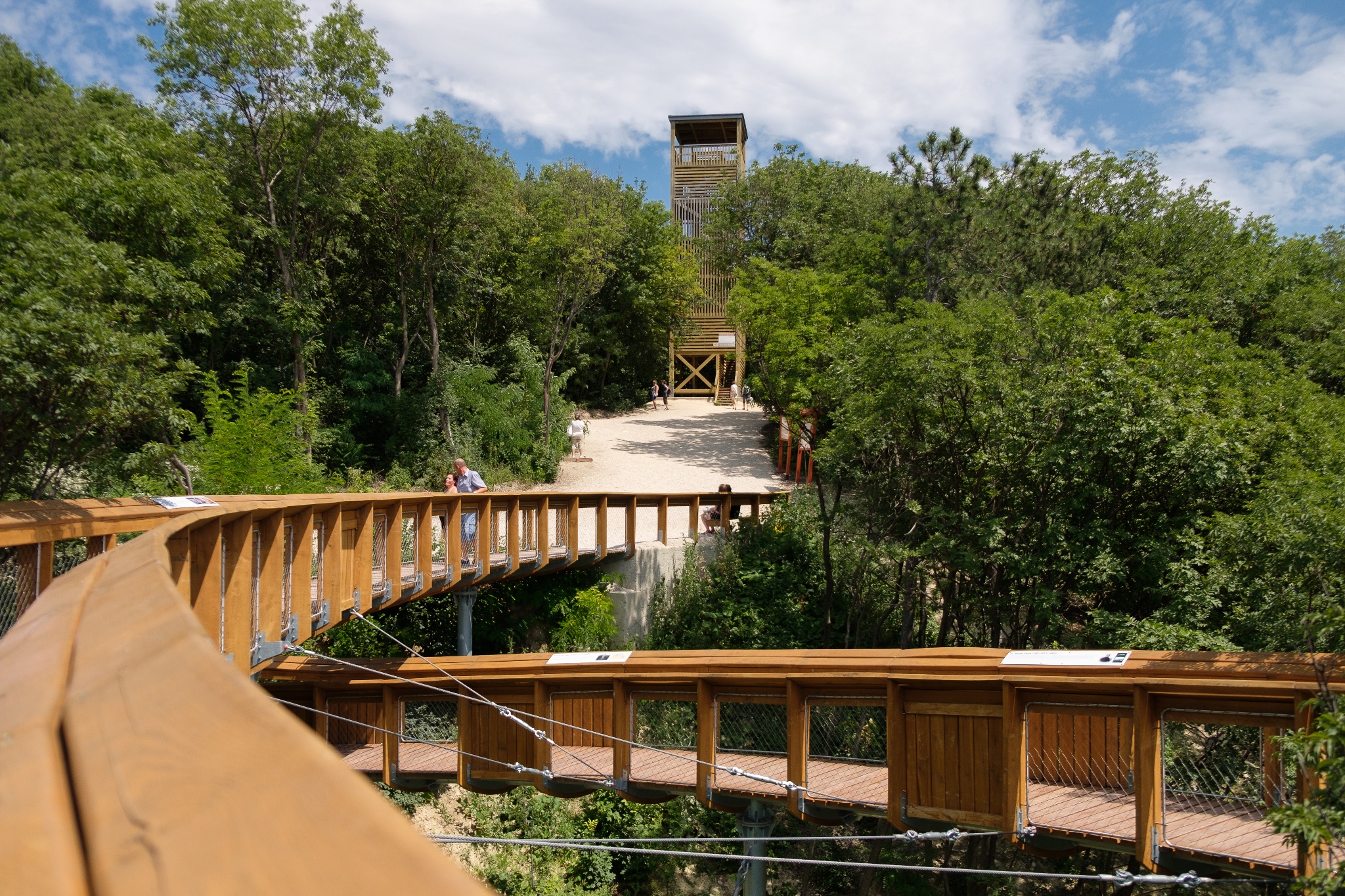
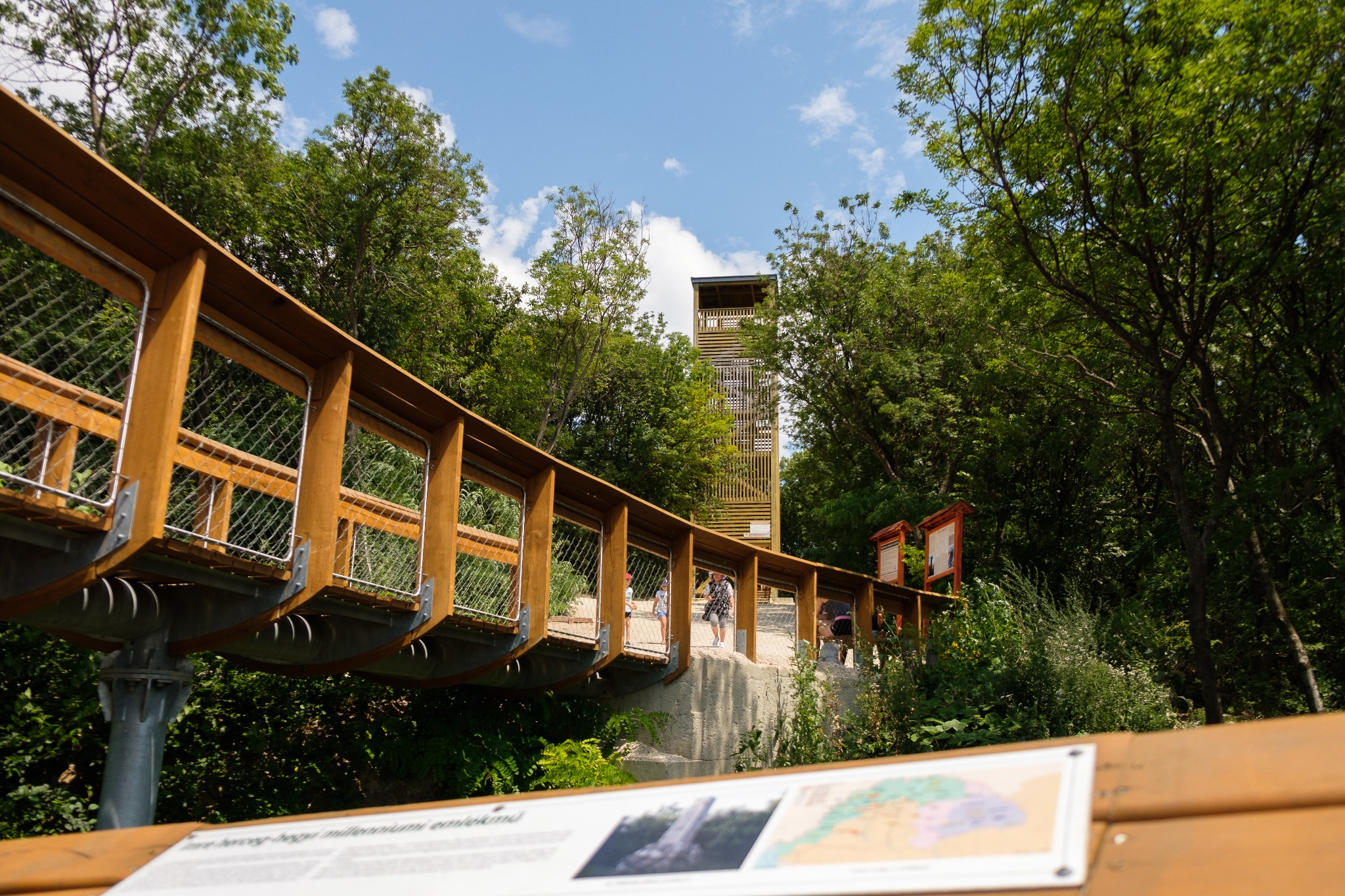
Although not directly belonging to the abbey, the environment of the Benedictine Archabbey of Pannonhalma includes the Blessed Mór Lookout and the unique canopy path a few steps away.
On a hill to the south of the Abbey complex stands the lookout tower, inaugurated in 2012 and named after one of the first Hungarian-born archpriests. Born around 1000, Mór Boldog was one of the first generation of Hungarian Benedictine monks and the first Pannonhalma student known by name. At a very young age, around 30, he became the third abbot of the monastery, founded in 996, and in 1036 King Stephen appointed him Bishop of Pécs. He is the author of the first legend in Hungary, the biography of St. Zoerard-Andras and Benedict. His figure is mentioned as a saint from the 15th century and he was beatified in 1848.
The multi-storey lookout tower, built from the oak trees of the Sokoró Hills, was erected by the Kisalföld Forestry Company in the park forest surrounding the Abbey, which is under their management. There had been a lookout before, which was opened in 1992, but the structure of the lookout was soon damaged and had to be demolished at the end of 2011. The new structure was also built in consultation with the Abbey of Pannonhalma, as the main concern was to fit in well with the spirit of the Abbey and its new minimalist buildings.
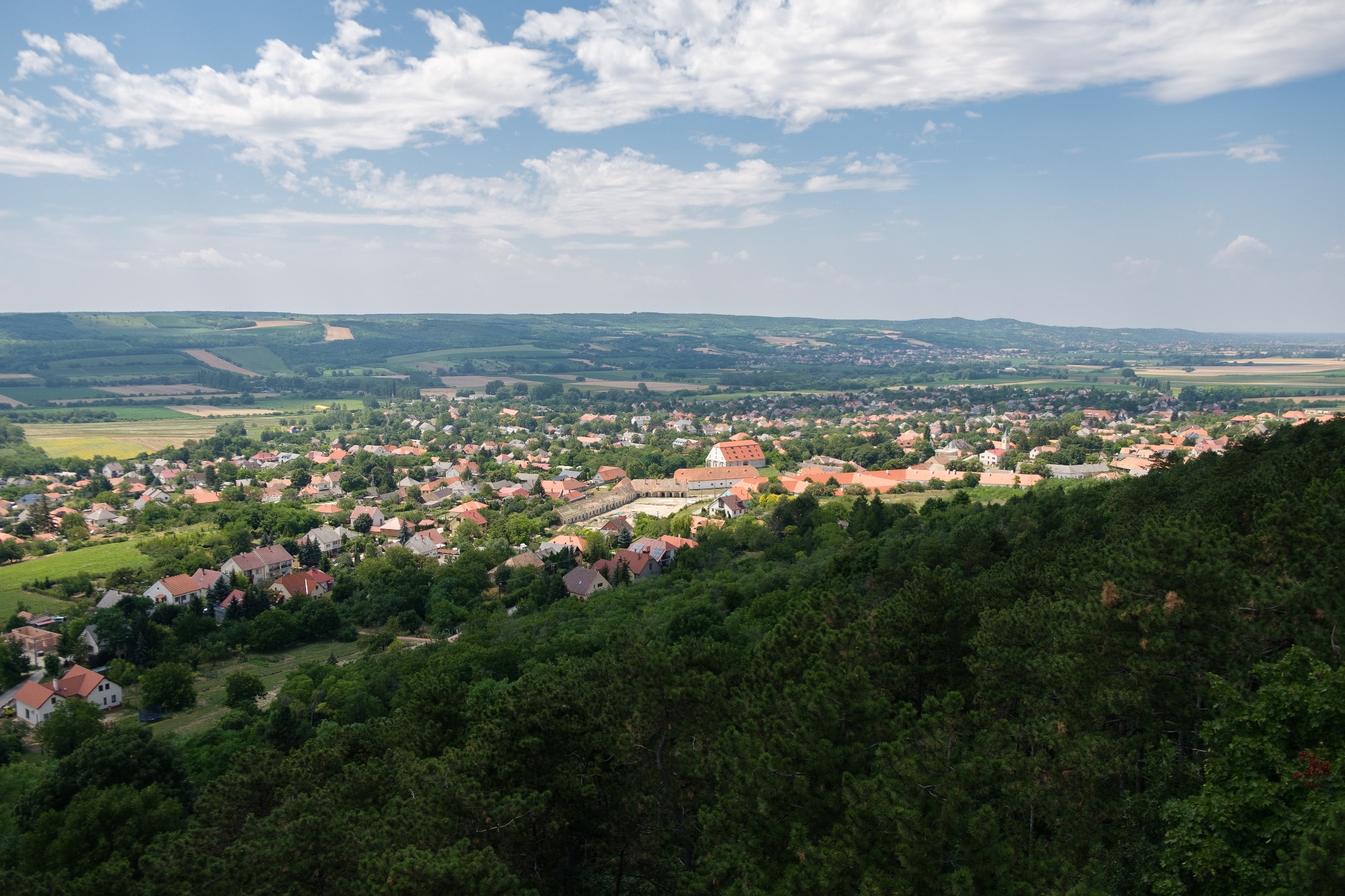
In line with the growth of the surrounding trees, the new lookout is six metres higher than the old one, so you can look around from the top at a height of 20 metres. You can see the rolling hills of the Sokoró hills, the town of Pannonhalma below and the basin of the same name, but on a clear day you can also see the northern slopes of the Bakony. Photographic information boards on the parapet help you identify the landscape features.
Source of text and images: https://www.termeszetjaro.hu/hu/poi/kilato/boldog-mor-kilato-es-lombkorona-tanoesveny-pannonhalma-/40062492/
Hasonló találatok

Point of interest - Fertőboz - Gloriette lookout
Fertőboz - Gloriette kilátóOne of the most famous buildings in Fertőboz, and perhaps in the whole area, is the Gloriette, a memorial hall built on the...
More
Point of interest - Hidegség - St Andrew the Apostle Church
Hidegség - Szent András apostol templomThe first written record of the village dates back to 1274. The Romanesque rotunda was probably built in the 12th century and...
More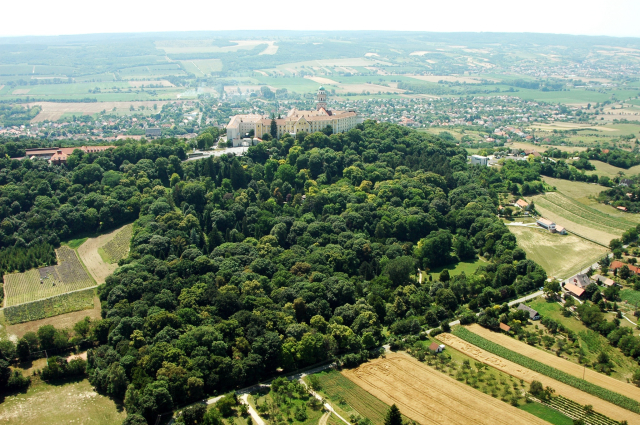
Point of interest - Pannonhalma - Arboretum Nature Reserve
Pannonhalma - Arborétum Természetvédelmi TerületThe abbey's 22-hectare garden has been an integral part of the Benedictine monks' daily life since the monastery was founded in...
More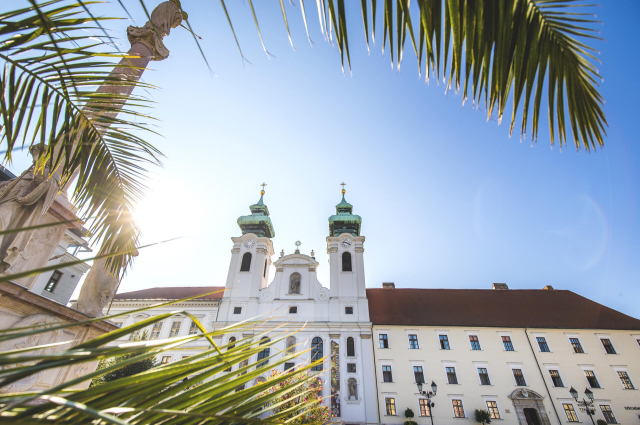
Point of interest - Győr - St Ignatius of Loyola (Benedictine) Church
Győr - Loyolai Szent Ignác (bencés) templomThe church of the Jesuits, who settled in the town in 1626, was built between 1634 and 1641, modelled on the Roman church of Il...
More